

Research summary of the report: ‘Understanding barriers and enablers to community participation for people with psychosocial disabilities in Fiji’
Background
Community participation is a fundamental right under the UN Convention on the Rights of Persons with Disabilities (UNCRPD), which Fiji has ratified. Despite this, people with psychosocial disabilities in Fiji continue to face significant barriers to inclusion. These barriers are rooted in stigma, discriminatory attitudes, and outdated legal frameworks that reinforce institutionalisation and deny individuals their rights to autonomy and participation.
This addresses a critical gap in evidence from the Pacific region by centering the voices of people with psychosocial disabilities and their families. It explores the lived experiences of inclusion and exclusion, identifies systemic and social barriers, and highlights strategies for promoting meaningful participation in community life.
This research was led by researchers from the Psychiatric Survivors Association of Fiji (the National Organisation of People with Disabilities representing people with psychosocial disabilities) and CBM Australia, and with research guidance from the University of Melbourne and Fiji National University, and made possible through funding from CBM Australia.
What did the researchers do?
Most participants had experienced exclusion based on their disability, including denial of decision-making rights, abuse, and limited access to services. Stigma was reinforced by institutional legacies, media portrayals, and discriminatory laws. Inclusion – when present – was transformative, improving mental health and fostering a sense of belonging. Peer support networks, especially those led by the Psychiatric Survivors Association, were vital in enabling participation. Legislative frameworks, particularly the Mental Health Act 2010, were found to be inconsistent with CRPD principles and contributed to systemic exclusion.
How can readers use this research?
This research provides actionable insights for policymakers, service providers, community organisations, families and individuals. It underscores the importance of rights-based approaches, inclusive service design, and the central role of lived experience in shaping effective supports. Readers can use this evidence to advocate for legislative reform, scale up peer support, and promote inclusive practices in communities.
Policy implications
“Inclusion isn’t just about being present – it’s about being valued, heard, and supported. When we are included, we feel like we belong. That changes everything.”
• People with psychosocial disabilities in Fiji face systemic exclusion across social, cultural, economic, and political domains.
• Stigma, discriminatory laws, and lack of community-based supports are key barriers to inclusion.
• Inclusion and peer support significantly improve emotional wellbeing and community participation.
• Legislative reform and investment in rights-based, community-driven support systems are urgently needed:
-
- Repeal or revise discriminatory laws, including the Mental Health Act 2010, to align with the CRPD.
- Recognise psychosocial disability as a distinct impairment group in disability support systems.
- Invest in community-based, rights-oriented services and supports.
- Promote supported decision-making and ensure legal capacity for all individuals.
- Include people with psychosocial disabilities in policy design, implementation, and evaluation.
- Invest in community awareness raising and education about psychosocial disability using disability rights frameworks.
Our approach to mental health document
People with psychosocial disabilities continue to face exclusion, stigma, and systemic barriers to their rights, especially in low‑resource settings...
Our work in the Pacific
Rise and Thrive: Building resilient communities through inclusive mental health
As the climate crisis accelerates, communities across the Indo-Pacific...
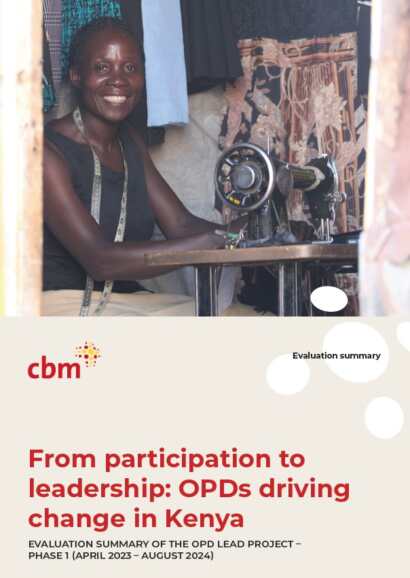
From participation to leadership: OPDs driving change in Kenya
From 2023 to 2024, CBM Australia supported phase 1 of the Organisations of People with Disabilities (OPD) Leadership, Engagement and Development (LEAD) project in Kenya. Learn how the project supported 11 OPDs across eight counties to implement their own projects whist strengthening their leadership, governance and advocacy to become drivers of inclusive change in their communities.
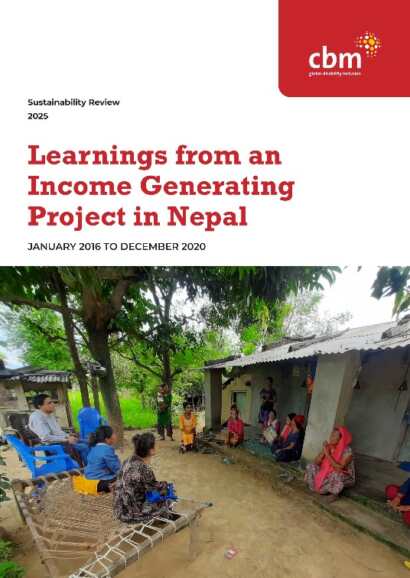
Sustainability Enquiry – Nepal
This report examines the long-term sustainability of the CBM Nepal's Saksham Mahila project's outcomes, identifying key elements that have contributed to or undermined its lasting impact, and forms part of CBM Global’s broader Sustainability Enquiry
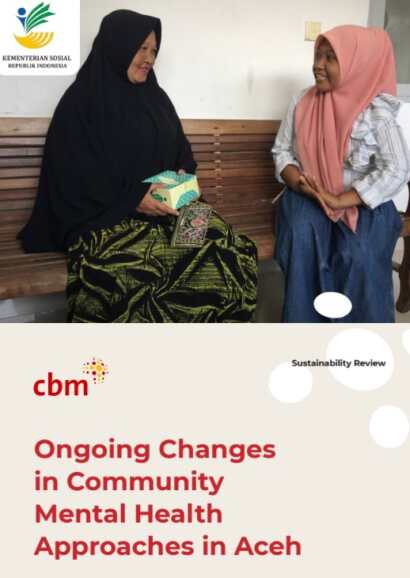
Sustainability Enquiry – Aceh Mental Health approach
As part of CBM Global’s Sustainability Enquiry, this document examines the long-term impact of our work transforming mental health care in Aceh, Indonesia and the factors influencing its sustainability.
Kenya Impact Report
CBM Global Kenya works across the country to support people with or at risk of Disability. They work closely with the African Inland Church Health Ministries (AICHM) and the Diocese of Meru - Service for the Poor in Adaptive Rehabilitation Kinship (DOM-SPARK). This report shares stories and reflections from those working on the Meru Inclusive Trachoma Wash-Plus (MINT) project and the OPD LEAD project.
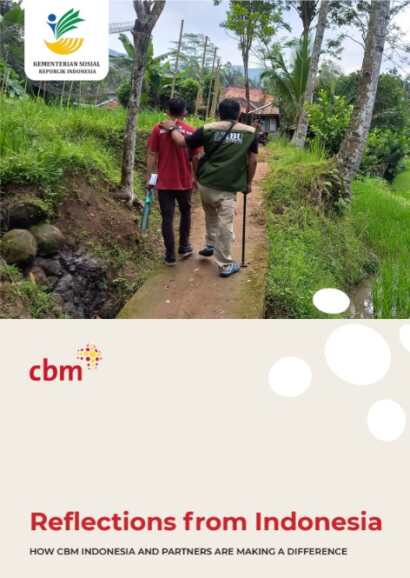
Indonesian Impact Report
CBM Indonesia works across the country to support people with disabilities. This report looks at five projects and documents the stories and reflections from those working on the projects. It looks at: -Our advisory work in Indonesia -The ACEH CBID project -A Community Mental Health project -I-See - an Inclusive Eye Health project -The People Centred Inclusive Humanitarian Action project
What we are learning from our evaluations
We reviewed 33 evaluations of our international projects. These are some of the common themes and learnings about our effectiveness.
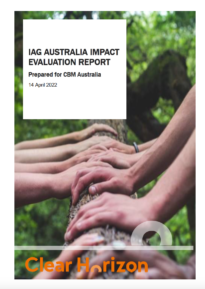
IAG Australia Impact Evaluation Report
An independent evaluation of the work of Australia’s Inclusion Advisory Group shows that the team effectively supports governments, multilaterals and NGOs to better address disability inclusion in their programs.
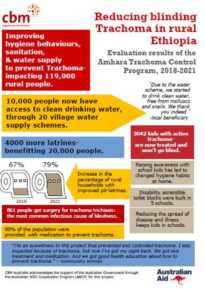
Reducing Trachoma in Ethiopia: Results
Results from the work of CBM and partners in reducing the prevalence of blinding trachoma - by improving water supply, hygiene and sanitation.
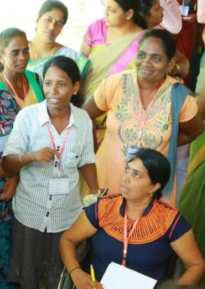
Lessons learned from partnerships with organisations of people with disabilities: CBM report
What do Organisations of People with Disability value about working with CBM? And where could we do better? How we are responding to work more equitably with the disability movement.
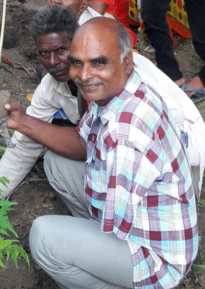
Study demonstrates people are better off
Since 2015, CBM Australia has tracked how the economic situation of people with disabilities and their families in rural India has changed, as a result of our Community Based Inclusive Development project. Here’s what we found.
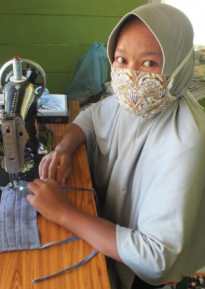
CBM’s work in Indonesia: approaches and achievements
An overview of how CBM works in Indonesia- in supporting eye health, mental health, community based inclusive development and disability inclusive humanitarian responses.
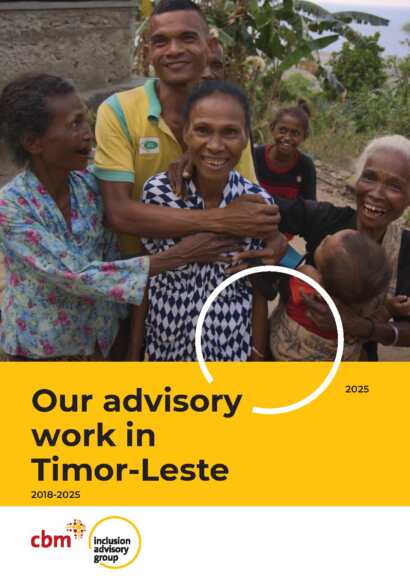
Our advisory work in Timor-Leste
The catalytic impact of our advisory work in Timor-Leste: 12 case studies..
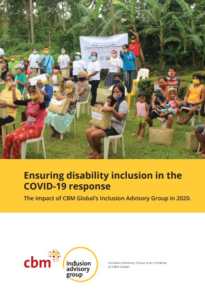
Inclusion Advisory Group: Impact Report 2020
This report gives an overview of the work of CBM Global's Inclusion Advisory Group in 2020, particularly in response to COVID-19.
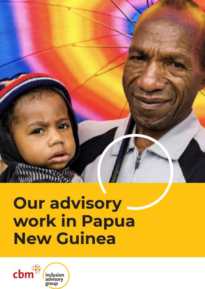
Our Advisory work in PNG
A snapshot of how CBM Global’s Inclusion Advisory Group has worked in Papua New Guinea, and how it has influenced for disability inclusion.
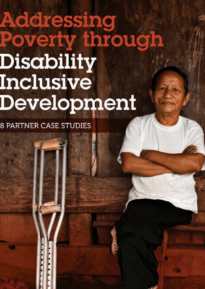
Addressing Poverty through Disability Inclusive Development
8 Case Studies on the inclusion of people with disabilities and their families in development initiatives.
Participation for All
Approaches to ensure inclusion.
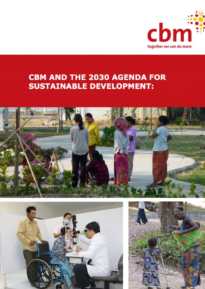
Strengthening Environmental Sustainability and Inclusion in Health Programs
Disability, Gender and Unpaid Care Work
Recognising, valuing and redistributing unpaid care work in CBM’s programs.
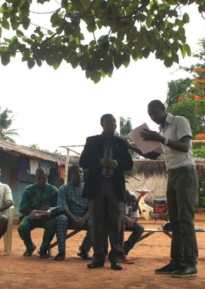
Influencing government
How CBM and partners work with government.
Design, Monitoring, Evaluation and Learning
Learning from evaluations of our projects: 2015 to 2017.
Disability Inclusive Education: considerations from a meta-evaluation
What we learned from evaluations of our inclusive education projects: 2015-17.
Inclusive Eye Health evaluations
What we learned from evaluations of our eye health projects: 2015 to 2017.
Making sure we do no harm
Learnings from our programs.
Disability Mainstreaming: Impact through a catalytic approach
“Disability Mainstreaming: Impact through a catalytic approach”, gives an overview of the work of our Australian team from 2014-19.