

Research summary of the report: ‘Understanding barriers and enablers to community participation for people with psychosocial disabilities in Fiji’
Background
Community participation is a fundamental right under the UN Convention on the Rights of Persons with Disabilities (UNCRPD), which Fiji has ratified. Despite this, people with psychosocial disabilities in Fiji continue to face significant barriers to inclusion. These barriers are rooted in stigma, discriminatory attitudes, and outdated legal frameworks that reinforce institutionalisation and deny individuals their rights to autonomy and participation.
This addresses a critical gap in evidence from the Pacific region by centering the voices of people with psychosocial disabilities and their families. It explores the lived experiences of inclusion and exclusion, identifies systemic and social barriers, and highlights strategies for promoting meaningful participation in community life.
This research was led by researchers from the Psychiatric Survivors Association of Fiji (the National Organisation of People with Disabilities representing people with psychosocial disabilities) and CBM Australia, and with research guidance from the University of Melbourne and Fiji National University, and made possible through funding from CBM Australia.
What did the researchers do?
Most participants had experienced exclusion based on their disability, including denial of decision-making rights, abuse, and limited access to services. Stigma was reinforced by institutional legacies, media portrayals, and discriminatory laws. Inclusion – when present – was transformative, improving mental health and fostering a sense of belonging. Peer support networks, especially those led by the Psychiatric Survivors Association, were vital in enabling participation. Legislative frameworks, particularly the Mental Health Act 2010, were found to be inconsistent with CRPD principles and contributed to systemic exclusion.
How can readers use this research?
This research provides actionable insights for policymakers, service providers, community organisations, families and individuals. It underscores the importance of rights-based approaches, inclusive service design, and the central role of lived experience in shaping effective supports. Readers can use this evidence to advocate for legislative reform, scale up peer support, and promote inclusive practices in communities.
Policy implications
“Inclusion isn’t just about being present – it’s about being valued, heard, and supported. When we are included, we feel like we belong. That changes everything.”
• People with psychosocial disabilities in Fiji face systemic exclusion across social, cultural, economic, and political domains.
• Stigma, discriminatory laws, and lack of community-based supports are key barriers to inclusion.
• Inclusion and peer support significantly improve emotional wellbeing and community participation.
• Legislative reform and investment in rights-based, community-driven support systems are urgently needed:
-
- Repeal or revise discriminatory laws, including the Mental Health Act 2010, to align with the CRPD.
- Recognise psychosocial disability as a distinct impairment group in disability support systems.
- Invest in community-based, rights-oriented services and supports.
- Promote supported decision-making and ensure legal capacity for all individuals.
- Include people with psychosocial disabilities in policy design, implementation, and evaluation.
- Invest in community awareness raising and education about psychosocial disability using disability rights frameworks.
Our approach to mental health document
People with psychosocial disabilities continue to face exclusion, stigma, and systemic barriers to their rights, especially in low‑resource settings...

Our work in the Pacific
Rise and Thrive: Building resilient communities through inclusive mental health
As the climate crisis accelerates, communities across the Indo-Pacific...
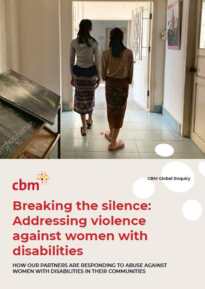
Breaking the silence: Addressing violence against women with disabilities
This document explores how CBM Global implementing partners, including OPDs, are responding to issues of gender-based violence in the communities in which they work, including what is working well and where more support is needed.
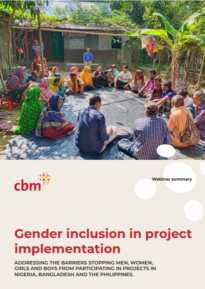
Gender Inclusion In Project Implementation
CBM Australia and partners in Bangladesh, Nigeria and the Philippines recently held a webinar looking at what has stopped men, women, girls, and boys from participating in project activities, and what they have done to address this. These are some of the key things we learned.
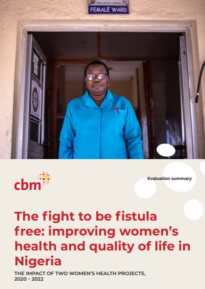
Nigeria Women’s Health Projects Evaluation
Evaluation summary highlighting the impact of the work of CBM and our partners in reducing obstetric fistula in Nigeria, by training healthcare workers, increasing community awareness and improving medical facilities and resources.
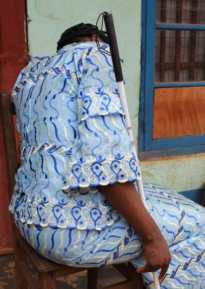
What’s stopping women with disabilities from reporting gender-based violence report
Research to better understand what stops women with disabilities in Cameroon from reporting incidents of sexual violence and domestic abuse, and recommendations about what development practitioners can do in responding more effectively.
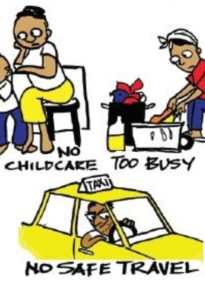
Gender barriers: what stops women or men participating
These two cartoon posters outline some of the barriers that might stop women or men getting involved in development projects. For development practitioners.
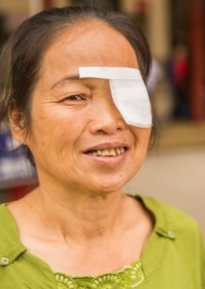
Tip Sheets for considering gender issues in International Programs
CBM-Australia has launched a series of tip sheets aimed at our field partners and other development practitioners that prompt consideration of issues related to gender in our work. Take a look at our first two in an ongoing series of tip sheets: on gender and eye health, and gender on mental health, released in 2021.
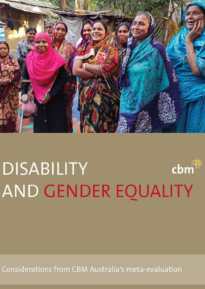
Disability and Gender Equality
Learning from evaluations of our projects: 2015 to 2017.

CBM Disability & Gender Toolkit
How organisations can assess their context and their approaches.
Disability, Gender and Unpaid Care Work
Recognising, valuing and redistributing unpaid care work in CBM’s programs.