

From Exclusion to Empowerment: Adrian’s Journey and the Impact of Disability-Inclusive Resilience Building in Bungoma County
Stories | Published: May 1, 2026 | Updated: May 18, 2026
From Exclusion to Empowerment: Adrian’s Journey and the Impact of Disability-Inclusive Resilience Building in Bungoma County
Adrian’s story begins with a childhood accident that changed the course of his life. At around just three years old, he fell from a tree and injured his leg. Because his family didn’t realise how serious the injury was – and couldn’t get medical care in time – his leg never healed properly. This left him with a physical impairment in his left leg.
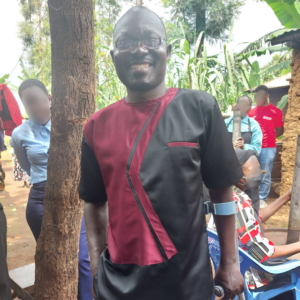
Alex, pictured above smiling at the camera
Now 45, Adrian reflects on his painful journey from exclusion to resilience and empowerment.
As a young man, Adrian dreamed of becoming a priest. But, in his third year at seminary (school of religion) a comment about his disability prompted him rethink his future. He left the seminary to pursue a university education, which is where his journey into disability rights and advocacy began.
Today, Adrian is a leading voice for disability inclusion in Bungoma County, Kenya. His work with the Disability Empowerment Network – a community-based organisation advocating for people with disability in the country – and advising the county level governor has been instrumental in shifting attitudes and influencing policies to make life more inclusive.
“We never knew how powerful some of these OPD [Organisations of People with Disabilities] partners could be,” said a coordinator from CBM partner, the Kenya Red Cross Society (KRCS), acknowledging the influence of the three-year CBM-supported project on mainstreaming disability in emergency and recovery operations.
The project worked directly with 36 groups of people with disabilities, focusing on climate-smart livelihoods, inclusive education, and disability inclusive disaster preparedness. It addressed key gaps such as the representation of people with disabilities, budgeting for disability inclusion, and making information accessible. Previously, people with disabilities were often left out of important decision-making and lacked access to vital information. Now, thanks to the project, all 36 groups have boards that includes a representative with a disability, and policies reflect their needs.
At the household level, the project has built awareness activities and empowered families to support their family members with disabilities. Livelihood initiatives, including start-up funding for small businesses and training on drought-resistant crops, have strengthened resilience and economic independence.
“Now they have some money and can put food on the table.” – Adrian
The project has also tackled deep-rooted stigma. In some areas, people with disabilities were seen as cursed. However, through advocacy and community engagement, people with disabilities have been brought out of the shadows and into the community. Disability sports, inclusive education, and economic empowerment have become tools of rehabilitation and transformation.
CBM’s approach – working hand-in-hand with communities to design and implement projects that reflect local needs – is critical to its success.
“We were looking for solutions far away, but CBM showed us we had them within ourselves,” – Adrian
This is more than a project; it’s a movement. A movement that has turned pain into purpose, exclusion into empowerment, and silence into advocacy.
CBM Australia acknowledges the support of the Australian Government through the Australian NGO Cooperation Program (ANCP).
https://www.cbm.org.au/stories/from-exclusion-to-empowerment
Related Stories
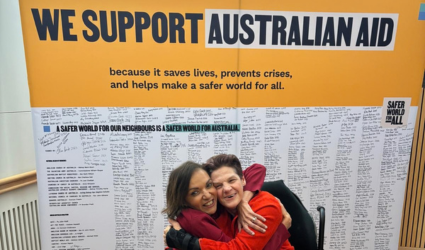
Stevie Wills: A heart connection in Parliament House
Discover how Stevie Wills shared a connection at Parliament House.
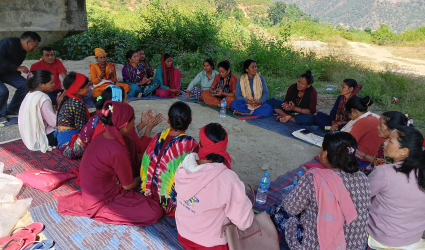
How communities helped make mental health a local government priority in Nepal
Discover how communities in Nepal helped make mental health...
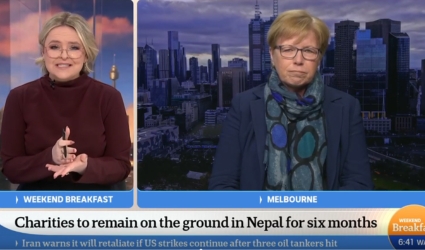
Jane Edge speaks to ABC Weekend Breakfast on the Nepal floods and how CBM is responding
CBM Australia CEO Jane Edge joined ABC Weekend Breakfast...